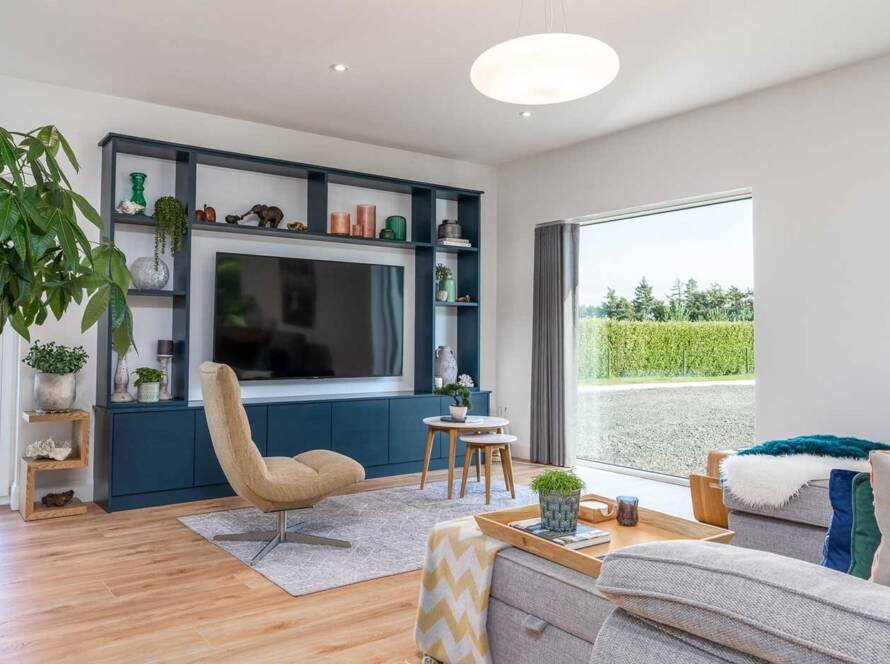
What if the most important room in your custom home has nothing to do with square footage, ceiling height, or the view from the window?
It’s the kitchen. Not because of how it looks on a real estate listing, but because of what happens in it 1,400 times a year. That’s roughly how many meals a Utah County family of five runs through their kitchen annually, and it doesn’t count the homework sessions, the Sunday meal preps, the birthday cake assembly lines, or the conversations that somehow always migrate away from the living room and end up around the island.
Most custom home buyers spend more time choosing their countertop color than they do planning how the room actually flows. That’s backward. And in Utah County, where families tend to be larger than the national average and kitchens function as the default gathering space for everything from Tuesday dinner to Thanksgiving morning, the layout decisions you make before breaking ground matter more than any finish you’ll select later. Talk to the Summit Construction team about how your kitchen design fits into your overall build plan.
The good news: you’re building custom. You don’t have to work around someone else’s plumbing or floor plan. Every decision is open, and every common kitchen frustration is avoidable if you sequence the planning correctly.
Key Takeaways
- Kitchen layout should be designed around how your family moves, cooks, and gathers, not around trends or magazine spreads.
- Material choices in Utah County need to account for hard water, dry air, and elevation, all of which affect countertops, cabinetry, and flooring differently.
- The biggest kitchen design regrets come from decisions made in isolation: choosing finishes before the floor plan is locked, or sizing the island before traffic flow is mapped.
Why the Kitchen Sets the Tone for the Entire Custom Home
The kitchen is the single room where design, function, budget, and daily life collide most directly. Get it right and the rest of the home feels easier. Get it wrong and you’ll notice it every morning for the next twenty years.

According to the National Association of Home Builders’ 2024 “What Home Buyers Really Want” report, the kitchen remains the most important room for buyers evaluating a home. That holds whether you’re building for yourself or thinking about long-term resale value in markets like Alpine, Highland, or Lehi’s Traverse Mountain.
But building a custom kitchen is different from remodeling one. You’re not working around existing plumbing and load-bearing walls. You’re starting from nothing, which means every decision is open and every mistake is avoidable if you sequence the planning correctly.
The sequencing matters more than the selections. Choosing your countertop material before your floor plan is locked is like buying tires before you’ve picked the car.
Layout First, Finishes Second
A custom kitchen layout should answer three questions before a single material is selected. How many people cook at the same time? Where does traffic flow between the kitchen and adjacent rooms? And what does the kitchen need to do besides cooking?
In most Utah County custom homes, the kitchen opens to a great room or family room. That open-concept connection changes the layout calculus compared to a closed kitchen. Your island isn’t just a prep surface. It’s a visual barrier between the cooking zone and the living zone, a serving counter for gatherings, and often the spot where kids eat breakfast on school mornings.
For families with two active cooks, a galley-style work zone behind a large island keeps both people in the workflow without crossing paths. For families where one person cooks and everyone else gravitates to the kitchen anyway, a wider island with deeper seating on the far side keeps people close without putting them in the way.
The work triangle concept still has value, but it was designed for one cook in a closed kitchen. Utah families building in 2026 need a layout that accounts for six people in the room at once, not one person moving between three points.
The Island Question
Every custom home client wants an island. The real question is what size and shape actually works in your floor plan.
An island needs 42 inches of clearance on all sides for comfortable movement, and 48 inches if the walkway faces a run of cabinets with doors that open into the path. That means a 4-by-8-foot island requires a kitchen footprint of at least 13 by 16 feet just for the island zone alone.
Too many custom kitchens squeeze a large island into a space that can’t support it. The result is a room that looks impressive in photos but feels cramped when four people are moving through it. A smaller island with better clearance will always outperform an oversized one in daily life.
Material Choices That Make Sense at Elevation
Utah County’s climate puts specific demands on kitchen materials that generic design guides don’t address. The combination of hard water, low humidity, and temperature swings between seasons affects countertops, wood cabinetry, and flooring in ways that matter over a ten-year span.
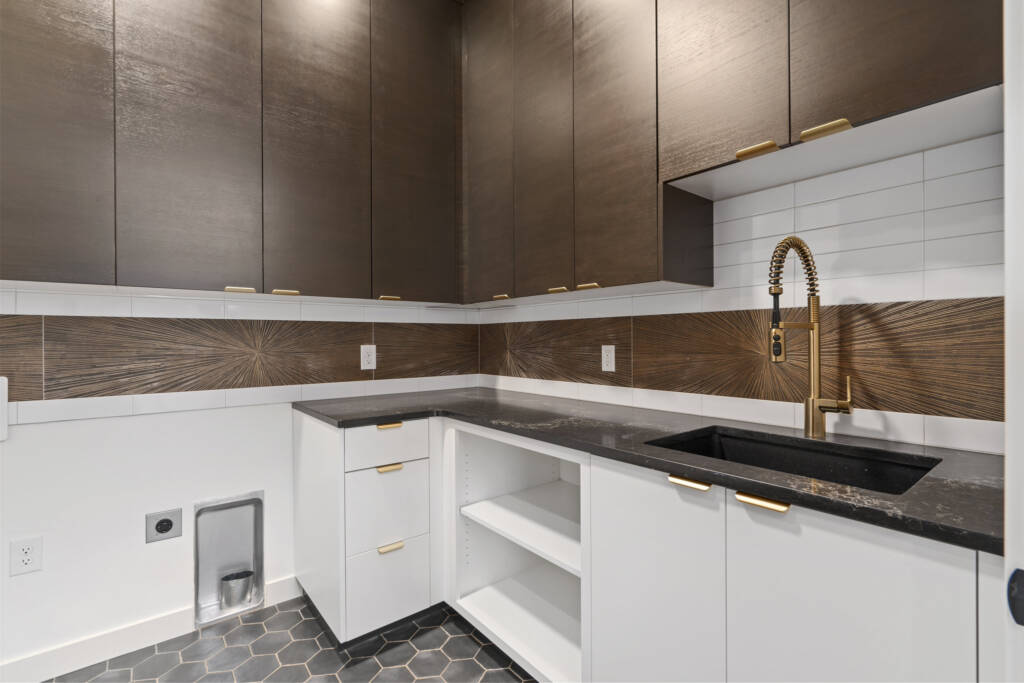
Countertops: Quartzite and quartz both perform well here. Natural quartzite handles heat and resists scratching, though it requires periodic sealing. Engineered quartz needs no sealing and handles hard water spotting better than marble or unsealed granite. Marble is beautiful and deeply impractical for a family kitchen in a hard-water market. If you love the look, consider it for a butler’s pantry or beverage station where it won’t take daily abuse.
Cabinetry: Utah’s dry air, particularly in winter when indoor humidity can drop below 20 percent, causes wood to contract. Solid wood doors in painted finishes are more likely to show hairline cracks at joints over time than stained doors, because paint reveals movement that stain disguises. This isn’t a reason to avoid painted cabinetry. It’s a reason to choose a builder and cabinet shop that understands wood movement and builds accordingly, with proper joint construction and finish systems rated for low-humidity environments.
Flooring: Engineered hardwood outperforms solid hardwood in Utah County’s climate because its layered construction resists the expansion and contraction that dry winters and monsoon-season humidity swings create. Large-format porcelain tile is another strong option, particularly for families who want durability without worrying about water damage near the sink and dishwasher zones.
These aren’t aesthetic preferences. They’re performance decisions that affect how your kitchen looks and functions in year eight, not just on move-in day.
The Decisions Most Families Overlook
Custom kitchen design has a long list of visible decisions: cabinet style, countertop color, backsplash pattern, hardware finish. Those get the most attention because they’re the most fun.
But the decisions that shape daily life are often the invisible ones. Outlet placement, for example. Most kitchens have outlets at counter height every four feet per code. A custom build lets you add outlets inside drawers for charging stations, at island height for stand mixers, and recessed into the backsplash so cords don’t drape across your countertops.
Lighting layers matter too. A single row of recessed cans looks fine in a plan set and washes out the room in real life. You want three layers: ambient light from recessed or flush-mount fixtures, task light from under-cabinet LED strips focused on work surfaces, and accent or decorative light from pendants over the island or a statement fixture over the dining area. Each layer should sit on its own switch or dimmer circuit.
Pantry design is another area where custom homes have an enormous advantage over production builds. A walk-in pantry with adjustable shelving, a countertop for small appliances, and its own outlet bank keeps the main kitchen clean and clutter-free. In a custom build, you’re designing the pantry at the same time as the kitchen, so the two work together instead of the pantry being an afterthought closet off the hallway.
Summit Construction’s design consultation process covers these details during the pre-construction planning phase, coordinating with your architect to ensure nothing gets missed in framing when it’s easiest to fix and least expensive to change.
What to Budget for a Custom Kitchen in Utah County
Kitchen costs within a custom home typically represent 10 to 15 percent of the total construction budget. For a home built in the $225 to $500+ per square foot range in Utah County, that puts the kitchen investment between roughly $45,000 and $120,000 depending on size, material grade, and appliance selections.
Cabinetry is usually the largest single line item, often 30 to 40 percent of the kitchen budget. Countertops, appliances, and plumbing fixtures each take 10 to 15 percent. The remainder goes to flooring, lighting, backsplash, and hardware.
The most common budget mistake is choosing appliances first. A $15,000 range and a $3,000 range both need the same rough-in. But if you allocate $15,000 to a range before you’ve finalized the cabinet layout and countertop material, you may find yourself cutting corners on the surfaces you touch and see every day to protect the appliance budget. Prioritize the things you interact with most: countertop surface area, cabinet storage, and lighting quality.
The Kitchen Your Family Actually Needs
Close your eyes for a second. Thanksgiving morning. The turkey’s been in since 6 AM. Someone’s mashing potatoes at the island while two cousins are rolling out pie crust at the counter near the window. Kids are weaving through, grabbing crackers. Your spouse is at the beverage station pulling mugs down for cider. And there’s room. Enough counter space, enough clearance, enough light.
That’s not a fantasy kitchen. It’s a planned kitchen. One where the layout was designed around exactly this kind of day, because someone asked the right questions before the foundation was poured.
The families building with Summit Construction in Springville’s Summit Creek, in Highland’s east bench, and across Utah County’s most desirable communities are building kitchens that work for Tuesday night at 6:45 and Thanksgiving morning equally well. Because a kitchen that only looks good in photos isn’t a custom kitchen. It’s an expensive missed opportunity.
Your Next Step
Your kitchen is one conversation inside a much larger project, but it’s the conversation that reveals whether a builder thinks about how you live or just how things look. Request a discovery call with Summit Construction to walk through your vision, your family’s daily routine, and the design details that turn a kitchen from a nice room into the center of your home. Call (801) 762-7500 or email brady@summitconstructionutah.com. Build slots for 2026 are filling, and locking in your design timeline now keeps your project on track.
Frequently Asked Questions
How much does a custom kitchen cost in a new Utah County home?
Kitchen costs typically run 10 to 15 percent of total construction budget. For a custom home built in the $225 to $500+ per square foot range, expect to invest $45,000 to $120,000 on the kitchen depending on material selections and size.
What countertop material works best in Utah’s dry climate?
Engineered quartz and quartzite both perform well. Quartz requires no sealing and handles hard water spotting better than marble or unsealed granite. Quartzite offers natural stone beauty with strong heat and scratch resistance but needs periodic sealing.
How big should a kitchen island be in a custom home?
Size depends on your kitchen footprint. An island needs 42 to 48 inches of clearance on all sides for comfortable movement. A 4-by-8-foot island requires a kitchen space of at least 13 by 16 feet just for the island zone. A smaller island with better clearance outperforms an oversized one in daily use.
Should I choose appliances or cabinetry first when designing a custom kitchen?
Finalize your cabinet layout and countertop selections before committing to appliance budgets. Cabinetry and countertops are the surfaces you touch and see most often, and they represent the largest share of kitchen cost. Appliance rough-ins are the same regardless of brand or price point.
About Summit Construction
Summit Construction is a custom home builder based in Springville, Utah, serving families across Utah County since 2011. With more than 200 completed home projects, the company is known for its open-book pricing, hands-on design collaboration, and construction quality that holds up to how families actually live. Summit Construction is a member of the National Association of Home Builders and the Utah Valley Home Builders Association. Call (801) 762-7500, email brady@summitconstructionutah.com, or visit summitconstructionutah.com.