Soil and drainage conditions can shape the foundation, grading plan, retaining strategy, and even where a home should sit on a lot. The goal is not to diagnose a property from a map, but to know what information should be reviewed before design and budget decisions are treated as final.
When families walk a lot for the first time, they look at the view, the neighbors, and the shape of the land. Almost no one looks at the dirt. That’s understandable. Soil isn’t exciting, and drainage only becomes interesting when it goes wrong.
But the ground under a home decides a great deal. It influences how deep the footings go, how the basement walls are built, how the yard is graded, and how water moves around the house for decades. A home designed without that information is built on assumptions.
This guide explains which soil and drainage conditions matter, when to gather information about them, and what to verify before you commit to a design. If you have a lot in mind, schedule a discovery call with Summit Construction so we can review what is known about it with you.
Key Takeaways
- Expansive and collapsible soils are two problem-soil types that can affect residential foundations in Utah.
- Drainage and groundwater influence grading, foundation waterproofing, and basement design.
- Geotechnical input is most useful before the design and foundation approach are finalized.
- Hazard maps and general information are a starting point, not a substitute for site-specific investigation.
What Utah’s Geologists Say About Problem Soils
The Utah Geological Survey identifies expansive and collapsible soils as two types of problem soil that can damage foundations and other infrastructure when they are not properly addressed.
That’s an important distinction. These soil types aren’t automatically a reason to walk away from a lot. Many homes are built successfully on challenging soils. The difference is whether the condition was identified early and designed for, or discovered after the fact.
Which Soil Conditions Can Affect Residential Foundations in Utah?
Soil behavior varies across Utah County, sometimes within short distances. A few conditions deserve particular attention.
Expansive soils. These soils have a high clay content. They swell when they get wet and shrink as they dry. That repeated movement can push against foundations and slabs, leading to cracking or uneven floors if the design doesn’t account for it.
Collapsible soils. These soils can be quite strong when they are dry and undisturbed. When they become saturated, however, they can settle significantly. Water from irrigation, poor drainage, or a leaking line can trigger that settlement under a foundation.
Variable fill. Some lots contain fill material from earlier grading or development. Fill that wasn’t placed and compacted properly may not support a foundation the way native soil would.
Rock and shallow bedrock. Rocky conditions are less about settlement and more about excavation. They can affect how footings and utility trenches are dug.
Each of these conditions calls for a different response. That’s why the foundation approach should follow the soil findings, not come before them.
How Can Drainage Change Site and Foundation Planning?
Water is a constant pressure on a home. How it is managed affects both the structure and the long-term health of the house.
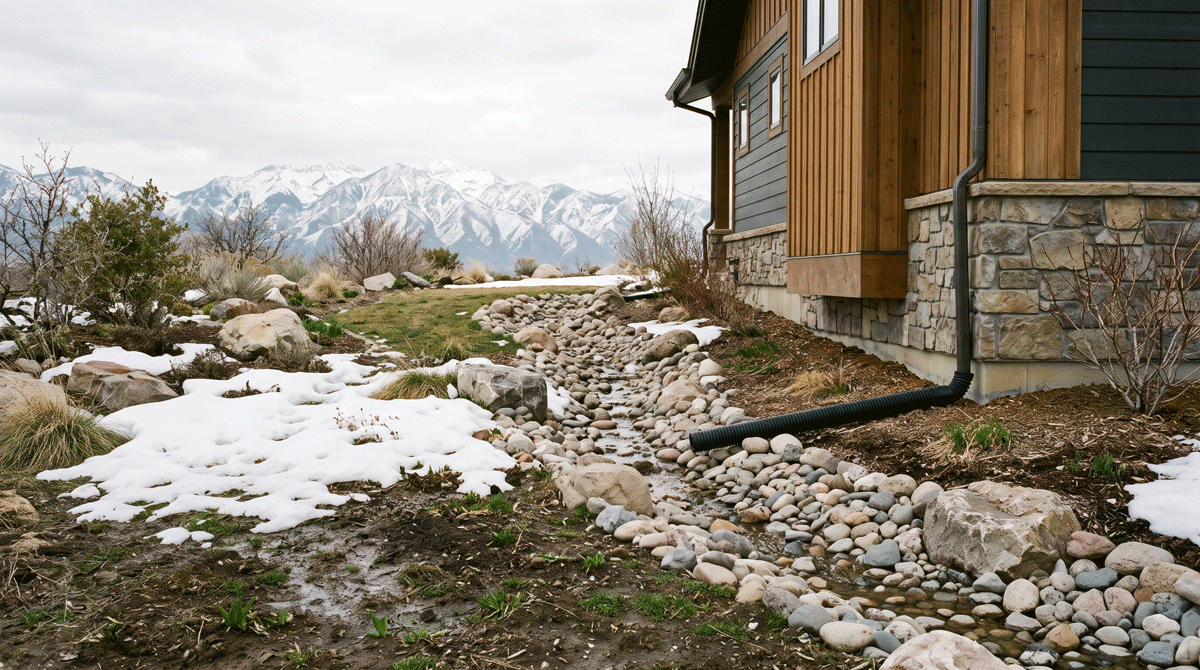
Surface drainage. Rain and snowmelt need a path away from the foundation. Grading, swales, and gutters should direct water around and away from the home, not toward it.
Water coming onto the lot. Runoff from uphill properties, roads, or slopes can flow across a lot. The site design should account for water arriving from beyond the property line.
Groundwater. A high water table can affect whether a full basement is practical and how foundation walls must be waterproofed and drained.
Irrigation and landscaping. On sites with collapsible or expansive soils, landscape irrigation near the foundation can matter. Planting and watering plans should be coordinated with the soil findings.
Foundation drainage. Perimeter drains, waterproofing, and backfill choices all help keep water from building up against basement walls.
Seasonal snowmelt. Utah winters can leave a lot of snow on a site, and spring melt can send water across the ground over a short period. Grading and drainage should be designed for that seasonal surge, not just for a typical summer storm. Driveways, patios, and window wells deserve particular attention, because they can collect or channel meltwater toward the home.
When drainage is planned with the design, it often shapes where the home sits on the lot, how the yard steps down, and where hardscape is placed.
When Is Geotechnical Input Useful Before Design Is Finalized?
Geotechnical input is most valuable before the design is locked. A geotechnical investigation typically evaluates soil type, bearing capacity, groundwater, and other conditions, then provides recommendations for the foundation and site.
Those recommendations can influence:
- The type and depth of the foundation
- Whether a basement is practical, and how it should be built
- How the site should be graded and drained
- Whether soil needs to be removed, replaced, or improved
- Where the home should sit to avoid problem areas
If the investigation comes after the design is finished, the plan may need to change. If it comes before, the design can be built around the findings from the start. At Summit, we price site work and structural decisions while the plan is still fluid, and you can read more about that approach on our custom homes page.
What Should Homeowners Verify Before Relying on a Lot Assumption?
It’s easy to assume a lot will behave like the one next door. Sometimes it does. Sometimes it doesn’t. Before you treat a lot assumption as fact, verify the following:
- A geotechnical investigation for the specific lot, or a plan to complete one
- Any existing reports from the developer, seller, or previous owner
- Groundwater conditions, especially if you want a basement
- Drainage patterns, including water arriving from neighboring properties
- Whether the lot contains fill, and how it was placed
- Any local requirements for geologic or soil review
- How the findings affect foundation design and site work
Soil and drainage conditions can change the site budget. For an early planning range, try our custom home cost calculator. Our 2026 guide to custom home cost in Utah County explains how lot conditions affect where a project lands.
Built on Solid Ground
The best foundations aren’t the ones homeowners think about. They’re the ones homeowners never have to think about. When soil and drainage are understood before the first drawing is finalized, the home is designed for the ground it actually sits on. That’s what lets a home stay quiet, dry, and solid for generations.
Your Next Step
Have Summit review available site information before the home design is locked around assumptions about the lot. Schedule a discovery call with Summit Construction to talk through your property and what is known about it. Call (801) 762-7500 or email brady@summitconstructionutah.com.
Frequently Asked Questions
What are expansive and collapsible soils?
Expansive soils have a high clay content and swell when wet, then shrink as they dry. Collapsible soils can be strong when dry but settle significantly when they become saturated. The Utah Geological Survey identifies both as problem-soil types that can damage foundations when not properly addressed.
Can drainage problems affect foundation design?
Yes. Poor drainage can increase moisture around the foundation, which can affect soil behavior and put pressure on basement walls. Drainage, grading, and foundation design should be planned together.
Is a geologic hazard map enough to evaluate a lot?
No. Hazard maps are useful for identifying areas that may need closer review, but they aren’t a substitute for a site-specific investigation. Conditions can vary from one lot to the next, even within the same neighborhood.
Who should interpret site-specific geotechnical findings?
A licensed geotechnical engineer should interpret the findings and provide recommendations. The structural engineer, architect, and builder then use those recommendations to design and build the foundation and site.
About Summit Construction
Summit Construction is a custom home builder based in Springville, Utah, serving families across Utah County since 2011. Founded by Brady Jensen, the company is known for honest, itemized pricing, architect-collaborative design, and craftsmanship built to last for generations.