There is a difference between building a house and building a home. A house is a structure that meets your current needs and fits your current budget. A home is something larger – a place that holds your family’s life, adapts to its changes, and carries meaning that compounds over time.
For many Utah County families, the custom home build is an opportunity to do something genuinely ambitious: to create a physical legacy that will matter to their children and potentially their grandchildren. A generational home is not defined by its square footage or its finish selections. It is defined by the quality of thinking that went into it and the quality of craft that built it.
Here is what that kind of thinking looks like in practice.


What Does ‘Generational Quality’ Actually Mean?
The phrase is easy to use and easy to dismiss as marketing language. But generational quality has a specific and practical meaning in home construction: it means making choices – in structure, in systems, in materials, in design – that will perform well not just at completion but 30, 40, and 50 years later. This standard changes decisions in concrete ways:- Structural framing: engineered lumber systems and advanced framing techniques over minimum-code construction
- Foundation and waterproofing: investment in systems that prevent the moisture intrusion issues that become costly problems in decade two and three
- Mechanical systems: higher-efficiency equipment that performs better over time, is serviceable with parts available, and does not require full replacement within 15 years
- Exterior materials: choices that weather gracefully rather than requiring intensive maintenance or premature replacement
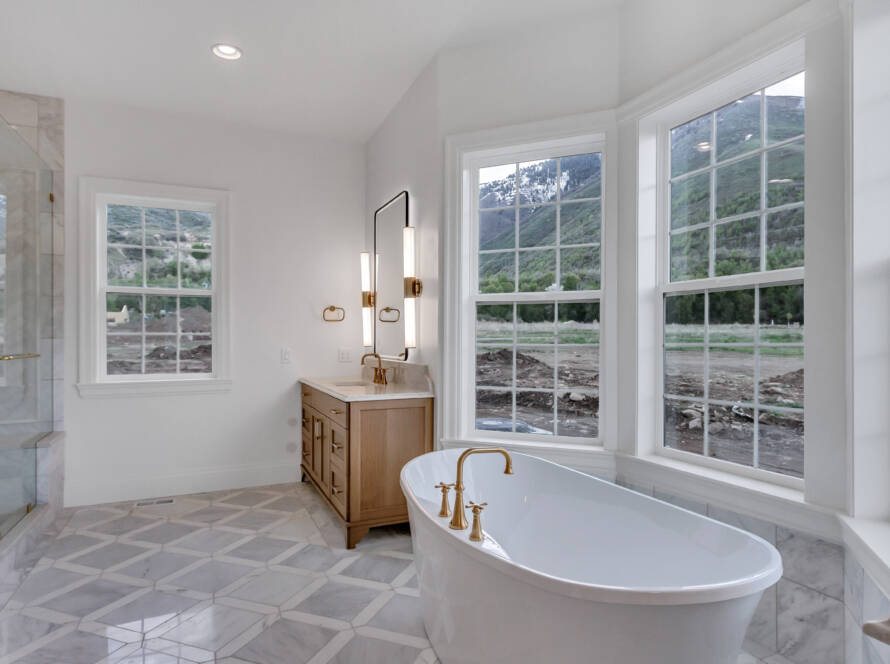
- Interior finishes: materials that improve with age – natural stone, solid wood, quality hardware – rather than materials that look good initially and deteriorate under use
Designing for Life Stages
A home built for how your family lives today should still serve your family well when your children are teenagers, when they leave for college, when they return with families of their own, and when you and your spouse are navigating the home without a house full of children. Few custom home clients spend enough time designing for the later stages of their life in the home. This typically produces floor plans that are optimized for the family’s present configuration but become awkward or impractical within 15 to 20 years.Design for the Empty Nest Phase
Utah County’s custom home market is increasingly populated by families who have built once and are now building again – often because their first custom home, designed for a family with young children, does not work well for a couple in their 50s or 60s. They built a five-bedroom home with a kids’ wing that now sits largely empty. The thoughtful approach: design for the long-term family configuration while ensuring that spaces can flex. Guest suites that function beautifully for visiting adult children rather than serving only as children’s rooms. Great rooms sized for the family you actually have rather than a hypothetical maximum occupancy. Primary suites on the main level that eliminate reliance on stairs as mobility changes over time.Accessibility Without Institutionalism
Planning for accessibility in a luxury custom home does not mean designing for a medical facility. It means making straightforward decisions – blocking in walls for future grab bars, widening primary hallways to 36 inches without visible differentiation from the rest of the home, selecting lever hardware rather than knob hardware throughout, designing threshold-free entry sequences – that have no visible impact on the home’s aesthetics but significant impact on its usability across decades.
Multi-Generational Living: A Growing Priority in Utah
Utah County’s cultural orientation toward extended family means that multi-generational living is a more frequent consideration in custom home planning here than in many other markets. Multi-generational design takes many forms:- Attached ADUs (Accessory Dwelling Units) with private entrance, kitchen, and full bathroom – designed to code as fully independent living spaces
- Guest suites with kitchenette that provide privacy and convenience without full separation from the main home
- Secondary primary suites on the main level for aging parents who will join the household
- Separate garage apartment configurations for adult children or live-in caregivers
The Investment Case for Thinking Long-Term
The financial case for building with a generational mindset is actually stronger than it might appear from a short-term cost perspective. Higher-quality structural systems, materials, and mechanical systems do cost more upfront. But they also:- Reduce ongoing maintenance costs significantly over 20 to 30 years
- Eliminate early replacement cycles – mechanical systems that last 25 years vs. 15 years represent real savings
- Maintain or increase property value relative to lower-quality builds in the same community
- Perform better in future sale scenarios, where quality buyers can recognize genuine construction quality
What to Ask Your Builder About Generational Quality
To assess whether a builder genuinely operates with a generational mindset or merely uses the language, ask:- What structural specifications do you use beyond code minimum, and why?
- What is your standard specification for waterproofing and moisture management?
- Can you walk me through the mechanical system specification you recommend and why?
- What exterior materials do you use, and what is their expected performance lifespan in Utah County’s climate?
- Do you have clients from 10 or more years ago who would speak to how their homes have held up?