A change order should be a documented decision, not a surprise. Utah County homeowners should know what triggered the change, what scope is different, what it does to the budget or schedule, and who must approve it before work proceeds.
Every custom home changes as it is built. You walk into the framed great room and realize the window wall could be wider. You see the basement and decide it should have a second bedroom. Sometimes the change comes from the site, like a soil condition no one could see until excavation started.
None of that is a problem on its own. Change is part of building something personal. The problem starts when a change is made casually, priced loosely, or approved with a quick conversation on the job site. That is how a well-planned budget slowly loses its shape.
This guide explains how change orders should work, so every change in your home is a clear, deliberate decision. If you want to talk through how changes are handled on your own project, schedule a discovery call with Summit Construction.
Key Takeaways
- A change order is a written document that records a change to the agreed scope, price, or schedule.
- Every change order should explain what changed, why, what it costs, how it affects the schedule, and who approved it.
- Some changes, especially structural or electrical ones, may require revised drawings or a new code review.
- Strong preconstruction is the most reliable way to reduce avoidable change orders.
Why Code Review Can Shape a Change
Some changes are cosmetic. Others touch the structure, the electrical system, or the layout in ways that must still meet code.
Utah County Community Development lists the 2021 International Residential Code and the 2023 National Electrical Code among the residential standards it applies. That department serves unincorporated Utah County, and properties inside a city follow that city’s building department. Either way, the principle is the same. A change that moves a bearing wall, adds a circuit-heavy feature, or alters an egress window may need updated drawings, engineering, or inspection before it can be built.
That is one reason change orders deserve a formal process. The cost of a change isn’t always just materials and labor. It can include design time, review time, and schedule time.
Why Do Change Orders Happen During a Custom Home Build?

Change orders generally come from three sources.
Homeowner-requested changes. These are the most common. Seeing a space in three dimensions often changes how you feel about it. You might upgrade a finish, add a feature, or rethink a room. These are your decisions to make, and a good process simply makes sure you see the full effect before you approve them.
Site or field conditions. Some conditions can’t be fully known until work begins. Unexpected rock, groundwater, or soil issues during excavation are typical examples. So are conflicts discovered when systems are installed, such as a duct run that doesn’t fit where the plans show it.
Design clarifications or code requirements. Sometimes drawings are incomplete or a detail doesn’t work as drawn. An inspector may also require a correction. These changes are less about preference and more about getting the home built correctly.
Knowing the source matters, because it often affects who is responsible for the cost. The contract should explain how each type of change is handled.
What Information Should Every Change Order Include?
A change order is only useful if it is complete. Before you sign one, make sure it includes the following:
- A clear description of the change, written so someone outside the project could understand it
- The reason for the change, such as a homeowner request, site condition, or design correction
- The cost impact, including materials, labor, and any related design or engineering work
- The schedule impact, stated in days or as a clear effect on upcoming milestones
- Any effect on allowances or previously approved selections
- Revised drawings or specifications, when the change affects the plans
- Signatures and dates from the people authorized to approve it
At Summit, every change order is priced in writing before the work is executed.
Keep every approved change order in one place. By the end of the build, that file becomes a clear record of how your home evolved and why the final cost is what it is.
How Can a Change Order Affect Budget and Schedule?
The visible cost of a change is usually the material and labor. The hidden costs are often bigger.
Rework. A change made after work is complete may mean removing finished work, not just adding new work. Moving an outlet before drywall is simple. Moving it after paint is not.
Ordering and lead times. A new window size, a different cabinet line, or an upgraded appliance may carry a longer lead time than the original selection. That can stall the trades that depend on it.
Sequencing. Construction runs in a sequence. When one trade waits on a decision, the trades behind it wait too. A one-day decision delay can turn into a much longer schedule effect if it pushes a crew to its next job.
Design and review time. Structural or system changes may need revised drawings, engineering review, or a revised permit. Each step adds time.
Builder fees on changes. Ask how the builder’s fee applies to change orders. Some builders apply a fee or markup to changes, and others handle it differently.
If you’re weighing a change that affects square footage or finish level, our custom home cost calculator can help you see how those decisions move a planning range. For a broader look at what drives budgets in this market, see our 2026 guide to custom home cost in Utah County.
How Can Preconstruction Reduce Avoidable Changes?
Some changes are worth making. Many others are simply decisions that weren’t made early enough. Preconstruction is where you catch those.
Price the design while it is still flexible. When the builder is in the design meetings, structural and site decisions are priced before the plans are final. You make the big tradeoffs on paper instead of in the field. That’s how we work with architects on Summit projects, and you can read more about it on our custom homes page.
Investigate the site early. Geotechnical information, utility locations, and grading plans reduce the chance of an unwelcome discovery during excavation.
Make rough-in selections on time. Plumbing fixtures, lighting locations, appliance specifications, and fireplace types affect what goes inside the walls. Deciding them before rough-in avoids rework.
Use a written decision schedule. A list of selections tied to construction milestones keeps decisions from piling up and stalling crews.
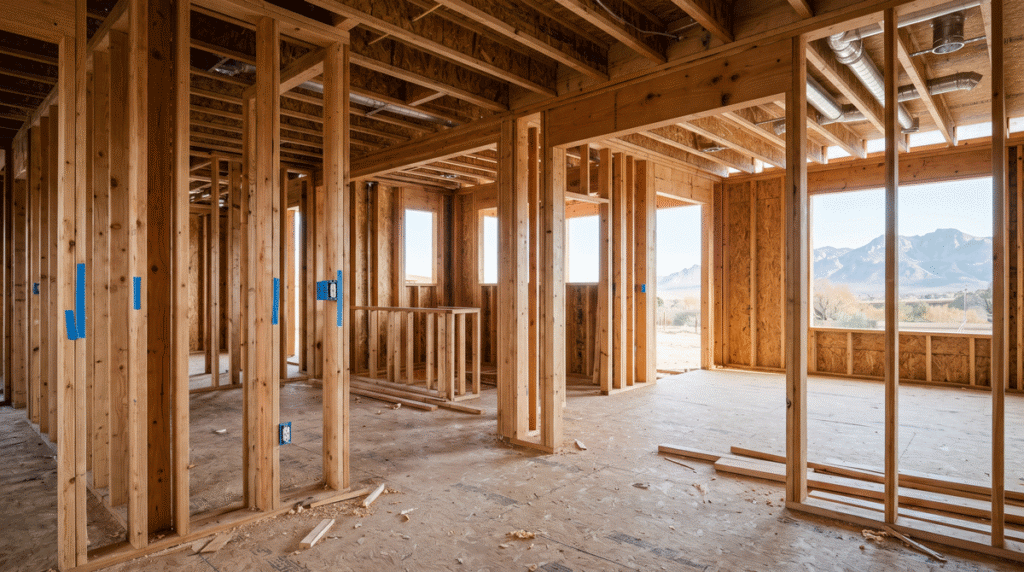
Walk the framing. At Summit, we walk home with you at framing. That’s the best moment to catch a layout concern while it is still relatively inexpensive to address.
Before You Approve a Change, Ask These Questions
- What exactly is changing, and why?
- What will it cost, including design or engineering?
- How many days will it add, if any?
- Does it affect any allowance or earlier selection?
- Will the drawings or permit need to be revised?
- Is it written and signed before work begins?
Change Without the Stress
A well-run change order process doesn’t stop you from improving your home as it takes shape. It does the opposite. It gives you the confidence to say yes to the changes that matter, because you know exactly what each one means. That’s what lets the finished home feel like a series of good decisions rather than a string of surprises.
Your Next Step
Before work moves forward, talk with Summit about how scope changes are documented and approved. Schedule a discovery call with Summit Construction to review your plans and understand exactly how changes are handled on your project. Call (801) 762-7500 or email brady@summitconstructionutah.com.
Frequently Asked Questions
Who should approve a change order?
The homeowner should approve any change that affects scope, cost, or schedule, along with the builder. The contract should name who is authorized to sign.
Can work proceed before a change order is signed?
As a rule, a change should be documented and approved before the work is done. At Summit, every change order is priced in writing before it is executed. Rare urgent situations, such as a safety issue, should still be documented as soon as possible.
How are change-order costs calculated?
Costs typically include materials, labor, and any related design, engineering, or permit work, along with the schedule effect. How a builder’s fee applies varies by contract.
Can a change order affect warranty coverage?
It can, depending on the change and the warranty terms. For example, a homeowner-supplied product or a deviation from a manufacturer’s installation requirements may be treated differently. Ask before you approve.
About Summit Construction
Summit Construction is a custom home builder based in Springville, Utah, serving families across Utah County since 2011. Founded by Brady Jensen, the company is known for honest, itemized pricing, architect-collaborative design, and craftsmanship built to last for generations.